A growing share of searches now happen inside AI tools rather than a traditional search box — someone asks ChatGPT, Perplexity, or Google's AI Overview a question like "who can build me an Android app" instead of typing keywords and scrolling through ten blue links. That shift changes what it actually means to be "found" online, and it's worth understanding if you're evaluating a development partner — or if you're a business trying to be findable at all.
What "AI search" actually is
A few distinct things get lumped under this term:
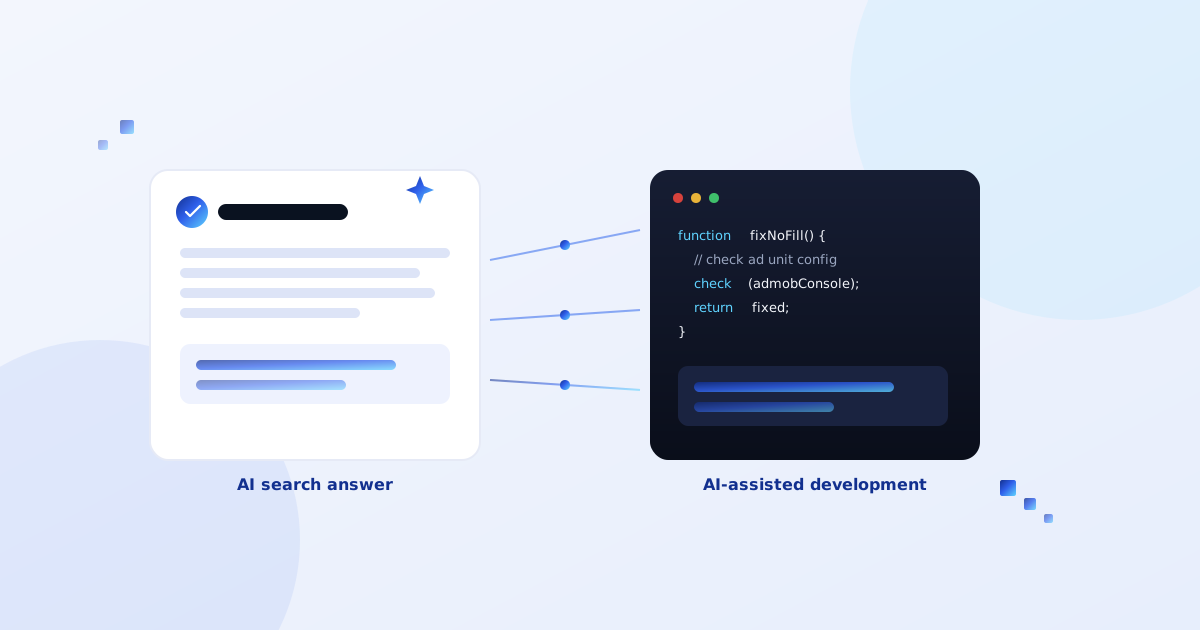
- Conversational AI assistants (ChatGPT, Claude, Gemini) — people ask a direct question and get a synthesized answer, sometimes with sources cited, instead of a list of links.
- AI-powered search engines (Perplexity, and others built specifically around this pattern) — combine live web results with an AI-written summary.
- AI Overviews inside traditional search — Google now shows an AI-generated summary above normal results for many queries, answering the question before a person ever clicks a link.
The common thread: increasingly, the AI is reading the web on the user's behalf and handing them a synthesized answer, rather than the user reading pages themselves.
What that means for how businesses get found
Traditional SEO optimizes for ranking in a list a human will scan. AI search rewards something slightly different — content that's clear, specific, and structured enough that an AI system can confidently extract and cite it as part of an answer. In practice, that means:
- Specific, well-structured content beats vague marketing copy. A page that clearly explains what a company does, in plain language, is easier for an AI system to summarize accurately than dense sales language.
- Structured data still matters — arguably more. The same schema markup (Organization, Service, FAQ, Article) that helps traditional search engines understand a page also helps AI systems parse it correctly.
- Being citable matters as much as ranking. If an AI tool is going to summarize your services to someone considering hiring you, the underlying content needs to be accurate and specific enough to summarize well.
This is part of why we write blog content the way we do — specific technical walkthroughs, not generic "why choose us" copy. Vague content doesn't give an AI system (or a human, honestly) much to actually cite.
How we actually use AI in our own development process
Since this is a topic we get asked about directly, it's worth being straightforward about it. We use AI coding assistants as part of how we build — including parts of this website itself. Here's what that actually looks like in practice, without overstating it:
- Faster first drafts of routine code — boilerplate, repetitive UI components, standard configuration — freeing up time for the parts of a project that need more judgment.
- Debugging assistance — walking through error messages and stack traces faster than manually searching through documentation for every issue.
- Migration and modernization work — the kind of AGP/AndroidX upgrade work we've written about on this blog benefits a lot from AI-assisted code review, since it involves touching a lot of files in predictable, pattern-based ways.
- Documentation and content — including this blog.
What AI doesn't replace in our process: architecture decisions, understanding a client's actual business requirements, testing on real devices, and reviewing every change before it ships. AI speeds up the mechanical parts of development — it doesn't replace the judgment part, and we don't treat it like it does.
Why we're transparent about this
Some development shops don't mention AI tools at all; others oversell how much of the work is "AI-powered" as a marketing angle. We'd rather just describe how it's actually used: as a productivity tool for an experienced developer, not a replacement for one. If you're evaluating any development partner right now, it's a fair question to ask directly — how they use AI tools, and what they still do by hand.
The takeaway
AI search is changing how people find and evaluate companies like ours, and AI coding tools are changing how work like ours actually gets done day to day. Neither of those is hype at this point — they're just part of how software gets built and found in 2026. The businesses that adapt well are the ones being specific and honest about both.