
We're on the receiving end of this decision, not the one making it, so we probably see a different slice of it than the "10 Reasons to Outsource to India" articles you've already read. We see the projects that come to us after a bad experience somewhere else, and we see the ones that go well from day one. The difference between those two almost never comes down to India as a place — it comes down to a handful of specific things that are genuinely worth understanding before you sign anything.
The cost difference is real, but it's not the whole story
Yes, development rates in India are typically a fraction of US or Western European rates for comparable work — that part of the pitch is true and not exaggerated. But if cost is the only factor in the decision, that's usually a sign the buyer hasn't thought through what they actually need. The real question isn't "is this cheaper," it's "is this the right trade-off for what I'm building." A quick MVP to validate an idea and a production fintech app handling real money have very different risk tolerances, and the cheapest option isn't automatically the right one for both.
Time zones are a real problem, and also a solved one
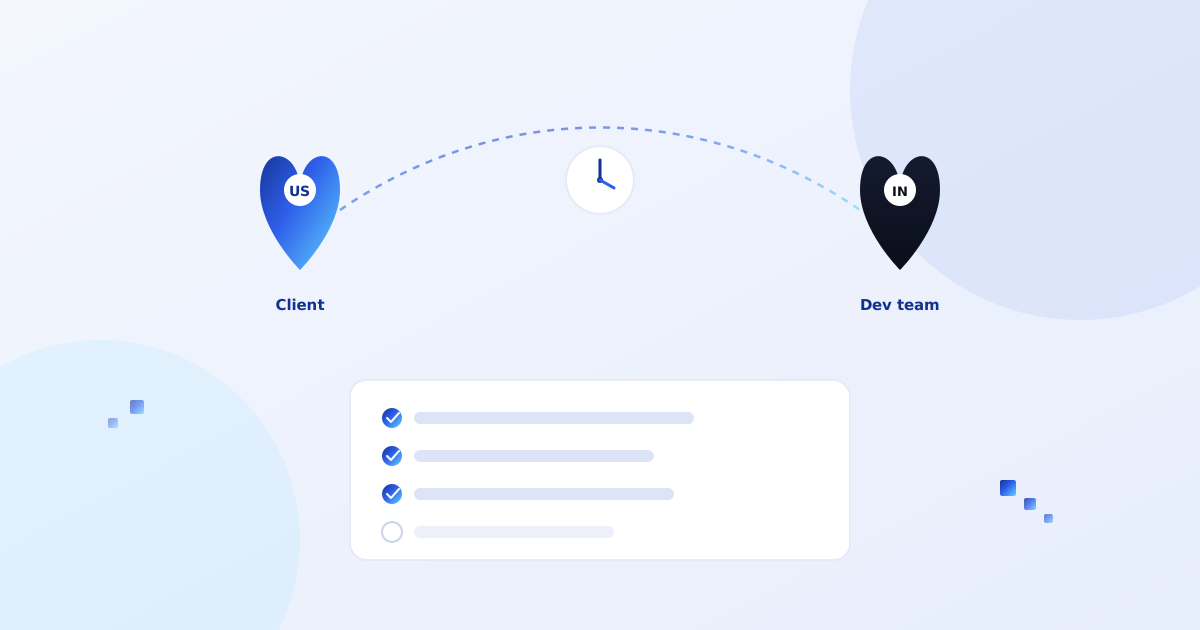
This is probably the single most common worry we hear, and it's a fair one. India is roughly 9.5 to 13.5 hours ahead of US time zones, and 4.5 to 5.5 hours ahead of most of Europe. That's a real gap. What it means in practice isn't "you'll never talk to your developer" — it means the working relationship needs to be designed around it rather than pretending it doesn't exist.
The way this actually works, in our experience: a couple of hours of genuine overlap gets scheduled deliberately for calls — usually early evening India time lines up with morning in the US, and mid-afternoon lines up reasonably with Europe. Everything else runs async — written updates, recorded demos, a shared task board that doesn't depend on someone being online right now to know what's happening. Teams that try to force constant real-time communication across this gap burn out fast. Teams that build an async-first habit from week one barely notice the time difference after the first month.
Communication quality varies more by team than by country
English proficiency in India's tech sector is generally strong, so language itself is rarely the actual barrier people expect it to be. What varies wildly, team to team, is whether they proactively tell you about problems or wait to be asked, whether "yes, that's possible" actually means "yes" or means "I don't want to disagree with you," and whether project updates are specific or vague. That's a team-culture issue, not a country issue — we've seen excellent and poor communication from teams on every continent. The fix is the same regardless of geography: ask for a short trial project before committing to something large, and pay close attention to how they communicate during it, not just what they deliver.
A concrete thing to test for: ask a prospective team a question you already know has a complicated or slightly inconvenient answer, and see if they give you the honest version or the version they think you want to hear. That one interaction tells you more than most reference calls will.
IP protection and data security are legitimate concerns, not paranoia
This deserves a straight answer rather than reassurance. Yes, you should have a proper contract — an NDA before any real discussion happens, and IP assignment terms in the actual development agreement making clear the code and any related work product belongs to you, not the development team, once paid for. Yes, if you're a European business, GDPR considerations apply to how any user or customer data is handled during development, regardless of which country the developers sit in — that's about the data itself, not the location of the people processing it. None of this is unique to India; it's just good practice with any outsourced team anywhere, and it's worth being firm about rather than treating it as an awkward ask.
Quality is genuinely uneven across the market — that part is true
India has an enormous software industry, from globally recognized firms down to individual freelancers, and the quality range across that spectrum is wide. This is probably the most legitimate concern in the whole conversation, and we wouldn't try to talk anyone out of it. The practical response isn't to avoid the market — it's to vet properly: look at actual shipped work, not just a portfolio page; ask specific technical questions about a past project and see if the answers are detailed or vague; start with a smaller paid trial engagement before a large commitment. A team confident in their own work will usually welcome this. One that resists it is telling you something.
What we'd actually tell a business considering this
Outsourcing to India isn't automatically the right call, and it isn't automatically the wrong one either — it depends entirely on what you're building, how much hands-on oversight you're able and willing to provide, and whether the team you pick treats communication as seriously as they treat code. The cost savings are real. So are the risks the skeptics bring up. Both things are true at once, and the actual outcome depends far more on which specific team you choose than on the country itself.